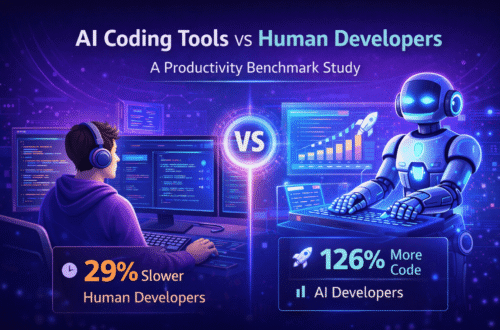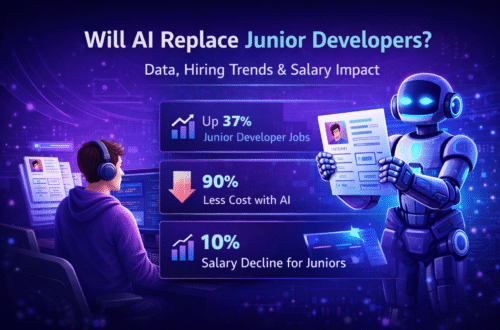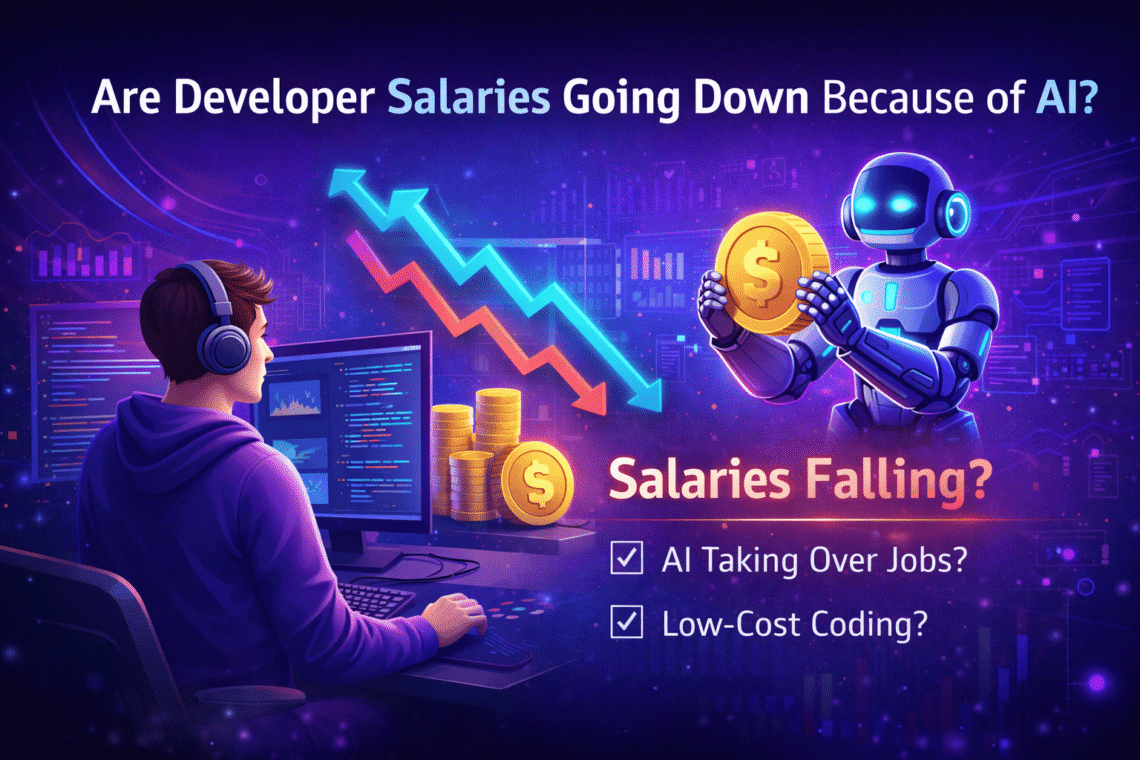
The rapid adoption of artificial intelligence tools across the technology sector has raised a pressing question among professionals and aspiring engineers: are developer salaries going down because of AI?
Over the past few years, the software industry has experienced hiring slowdowns, restructuring cycles, and shifts in workforce demand. At the same time, AI powered coding assistants, automation platforms, and productivity tools have become more widely integrated into development workflows. These parallel trends have led many to connect salary concerns directly to artificial intelligence.
However, developer compensation is influenced by multiple variables. Market demand, global economic conditions, regional talent supply, specialization level, company funding cycles, and technological shifts all contribute to salary movement. AI adoption is one factor within a broader economic and industry context.
It is also important to distinguish between short term hiring adjustments and long term structural demand. Software development remains central to digital infrastructure, cloud platforms, cybersecurity systems, financial technology, healthcare software, gaming, and enterprise applications. As industries continue to rely on software systems, the need for skilled developers persists.
The key issue is not whether AI exists within development environments, but how it changes expectations, skill requirements, and productivity standards. In the sections that follow, we will examine salary trends, role shifts, and the broader economic factors shaping compensation in the modern software industry.
Quick Answer: Are Developer Salaries Declining Because of AI?
Developer salaries are not uniformly declining because of AI. Compensation trends vary by region, experience level, specialization, and overall market conditions. While AI tools may increase productivity and shift role expectations, broader economic cycles, hiring demand, and skill scarcity remain the primary drivers of salary movement.
In some markets, hiring slowdowns and restructuring have created temporary pressure on compensation growth. However, specialized roles such as cloud engineering, cybersecurity, distributed systems, and machine learning continue to command competitive salaries.
Rather than causing a universal salary drop, AI is contributing to a shift in skill demand. Developers who adapt to evolving toolsets and strengthen high value technical expertise are generally positioned to maintain or increase their earning potential.
Understanding salary trends requires examining market forces beyond automation alone.
What Is Actually Driving Developer Salary Trends
To understand whether developer salaries are declining, it is necessary to examine the broader forces that influence compensation. Salary movement in the technology sector is shaped by economic cycles, supply and demand dynamics, specialization levels, and geographic factors.
Economic Cycles and Hiring Adjustments
Technology companies are sensitive to macroeconomic conditions. Interest rates, venture capital availability, corporate earnings, and global market stability influence hiring budgets. During expansion phases, companies compete aggressively for talent, often increasing salary offers. During slowdowns, hiring freezes and restructuring can reduce salary growth momentum.
Recent fluctuations in the technology sector reflect broader economic adjustments rather than a single technological cause.
Supply and Demand Dynamics
Compensation levels are closely tied to talent availability. Over the past decade, coding bootcamps, online education platforms, and remote work opportunities have expanded the global developer pool. Increased supply can moderate entry level salary growth in competitive markets.
At the same time, experienced engineers with strong system design and architecture skills remain in limited supply. When demand for advanced expertise exceeds availability, salaries remain competitive.
Specialization and Skill Scarcity
Not all developer roles are affected equally. Specialized fields such as cloud infrastructure, distributed systems, cybersecurity, data engineering, and machine learning command higher compensation due to complexity and limited talent pools.
Generalist roles with lower technical barriers may experience slower salary growth compared to highly specialized positions.
Geographic and Remote Work Impact
Remote work has expanded access to global talent. Companies can hire across regions with different cost structures, which may influence compensation strategies. In some cases, geographic salary adjustments have reduced location based pay premiums.
However, top tier talent in high demand specializations continues to receive competitive compensation regardless of location.
Has Artificial Intelligence Reduced Demand for Developers?
The introduction of advanced automation tools has changed how software is written, tested, and maintained. However, determining whether AI has reduced overall demand for developers requires examining actual role evolution rather than isolated workflow improvements.
Productivity Versus Headcount
AI assisted coding tools can generate boilerplate code, suggest syntax corrections, and automate repetitive tasks. This increases individual productivity. Higher productivity per developer does not automatically translate into fewer developers overall.
Historically, improvements in development efficiency have often led to increased software output rather than workforce reduction. As development becomes faster, organizations frequently expand product scope, accelerate feature releases, and launch additional services.
Shift in Skill Expectations
Instead of reducing demand, AI is contributing to a shift in expectations. Employers increasingly prioritize:
-
Strong system architecture knowledge
-
Ability to review and validate generated code
-
Performance optimization expertise
-
Integration of complex services and APIs
-
Security and compliance awareness
Developers who can design scalable systems and manage production environments remain essential.
Expansion of AI Related Roles
AI adoption has also created new roles, including:
-
Machine learning engineers
-
AI infrastructure developers
-
Data engineers
-
AI product specialists
-
Model operations engineers
These positions often require advanced technical skills and command competitive compensation.
Continued Software Demand Across Industries
Software development is expanding beyond traditional technology companies. Healthcare, finance, manufacturing, education, logistics, and government sectors continue investing in digital infrastructure. This structural demand supports ongoing hiring needs.
Are Junior Developer Salaries Under Pressure?
Entry level compensation is often more sensitive to market shifts than senior level roles. When hiring slows or talent supply increases, junior positions typically experience greater competition. This has led to concerns that automation and AI assisted tools may place additional pressure on entry level developer salaries.
Increased Competition at the Entry Level
Online learning platforms, coding bootcamps, and global remote hiring have expanded access to software careers. As more candidates enter the job market, competition for junior roles increases. Higher competition can moderate salary growth in some regions.
This dynamic is primarily driven by supply and demand rather than automation alone.
Automation of Repetitive Tasks
Many junior responsibilities historically included writing basic scripts, fixing minor bugs, maintaining documentation, and supporting feature implementation. AI assisted coding tools can help perform some of these tasks more efficiently.
However, junior developers are not hired only for repetitive execution. Entry level roles serve as training pathways where individuals build core knowledge in debugging, architecture fundamentals, testing, and collaboration. These developmental functions remain necessary for long term workforce growth.
Rising Skill Expectations
Employers increasingly expect junior developers to understand modern workflows, including:
-
Version control systems
-
Continuous integration practices
-
Cloud deployment basics
-
Code review processes
-
Security fundamentals
The addition of AI assisted tools to workflows raises expectations for validation and critical thinking rather than eliminating positions outright.
Long Term Career Progression
While entry level hiring may fluctuate during economic slowdowns, experienced developers with proven system design and production experience continue to command competitive salaries. Junior roles remain the foundation for building that expertise.
Which Developer Roles Are Growing Because of Artificial Intelligence
While some concerns focus on automation risk, several developer roles are expanding due to increased adoption of AI systems and data driven infrastructure. These positions require specialized technical knowledge and often command strong compensation.
Machine Learning Engineers
Machine learning engineers design, train, test, and deploy predictive models. Their work includes data preprocessing, model optimization, performance evaluation, and integration into production systems.
As organizations integrate intelligent features into products, demand for professionals who understand model architecture and deployment pipelines continues to grow.
Data Engineers
Data engineers build and maintain the pipelines that collect, transform, and store large datasets. Reliable data infrastructure is essential for analytics, reporting, and machine learning systems.
Growing reliance on data driven decision making has increased demand for scalable storage solutions, real time processing frameworks, and distributed systems expertise.
AI Infrastructure and Platform Engineers
Deploying AI systems at scale requires specialized infrastructure. Engineers in this area manage cloud resources, container orchestration, model serving environments, and monitoring systems.
These roles combine knowledge of distributed computing, DevOps practices, and performance optimization.
Cloud and DevOps Specialists
As AI applications rely heavily on cloud computing environments, cloud architects and DevOps engineers play a central role in maintaining reliable, scalable systems. Continuous integration, deployment automation, and infrastructure as code practices remain essential.
Security Engineers
The expansion of AI systems increases the need for secure model deployment, data protection, and compliance with regulatory standards. Security engineers help safeguard infrastructure and maintain system integrity.
Which Developer Roles May Face Compensation Pressure
While many specialized roles continue to grow, certain positions may experience slower salary growth due to automation, increased competition, or lower technical barriers to entry. This does not imply elimination, but rather a shift in market value dynamics.
Basic Scripting and Low Complexity Roles
Positions focused primarily on simple scripting, template modification, or minor feature adjustments may face greater competition. When tasks are repetitive and require limited architectural understanding, productivity tools can reduce the time required to complete them.
In markets where many developers possess similar baseline skills, compensation growth may moderate due to supply levels.
Maintenance Only Positions
Roles limited to routine maintenance without involvement in system design or optimization may offer fewer advancement opportunities. As development practices emphasize automation, monitoring tools, and structured testing, routine fixes may require less manual effort.
Developers who expand beyond maintenance into system improvement, performance tuning, and architecture planning typically strengthen their earning potential.
Highly Standardized Development Work
Projects that follow highly standardized templates or frameworks can lower differentiation among candidates. When technical requirements are uniform and widely accessible through training resources, salary competition increases.
In contrast, developers who specialize in performance engineering, distributed systems, security architecture, or advanced integrations often maintain stronger compensation leverage.
Long Term Salary Outlook for Developers
Evaluating the long term salary outlook for developers requires examining structural demand for software across industries. Digital infrastructure continues to expand in sectors such as finance, healthcare, manufacturing, logistics, education, entertainment, and government services. As organizations modernize operations, software systems remain central to productivity and service delivery.
Ongoing Digital Transformation
Companies across industries continue investing in cloud platforms, mobile applications, automation systems, cybersecurity frameworks, and data analytics solutions. These initiatives require developers who can design, build, integrate, and maintain scalable systems.
Digital transformation is not limited to technology firms. Traditional industries increasingly depend on software engineering expertise to remain competitive.
Growth of Cloud and Distributed Systems
Cloud computing and distributed architectures remain foundational to modern applications. Developers skilled in scalable system design, containerization, infrastructure automation, and reliability engineering continue to be in demand.
As applications become more complex and globally distributed, technical depth becomes more valuable.
Cybersecurity and Compliance Requirements
Security threats and regulatory frameworks continue to evolve. Organizations must maintain secure systems, protect user data, and comply with regional standards. Developers who understand secure coding practices, authentication systems, and infrastructure hardening contribute directly to risk reduction.
Security related expertise often supports strong compensation stability.
Increasing Software Complexity
Modern applications integrate multiple services, APIs, databases, and third party systems. Managing this complexity requires experienced engineers who understand architecture planning, performance optimization, and system reliability.
As complexity increases, so does the need for professionals who can manage and scale these environments effectively.
How Developers Can Protect and Increase Their Salary
In evolving technology markets, compensation growth is closely tied to skill development, specialization, and adaptability. Developers who actively expand their expertise and align with industry demand trends are better positioned to maintain or increase earning potential.
Build Strong System Design Skills
System design knowledge differentiates mid level and senior developers from entry level contributors. Understanding scalability, reliability, data modeling, and architectural tradeoffs strengthens professional value.
Developers who can design distributed systems and explain architectural decisions clearly often command higher compensation.
Specialize in High Demand Areas
Specializations such as cloud infrastructure, cybersecurity, data engineering, distributed systems, and performance optimization remain in demand across industries. Developing depth in one or more of these areas can increase market competitiveness.
General programming knowledge is important, but specialization often leads to salary growth.
Strengthen Debugging and Optimization Expertise
Organizations value developers who can identify performance bottlenecks, reduce system latency, optimize memory usage, and resolve production issues efficiently. These skills directly impact operational stability and user experience.
Technical depth in performance and reliability engineering contributes to long term salary resilience.
Understand Modern Development Workflows
Familiarity with version control systems, continuous integration pipelines, containerization, infrastructure automation, and cloud deployment processes improves employability. Employers increasingly expect developers to work across the full development lifecycle.
Adaptability to evolving tools and frameworks enhances professional positioning.
Develop Domain Knowledge
Industry specific knowledge in areas such as fintech, healthcare technology, gaming, enterprise software, or cybersecurity can differentiate candidates. Domain expertise allows developers to contribute beyond implementation and participate in strategic decision making.
Frequently Asked Questions
Will artificial intelligence reduce software engineer salaries
Artificial intelligence tools may increase productivity and shift role expectations, but salary trends are primarily influenced by market demand, specialization, and economic conditions. Compensation varies by experience level and technical depth rather than automation alone.
Is programming still a high paying career
Software development continues to offer competitive compensation in many regions, especially for professionals with expertise in system design, cloud infrastructure, cybersecurity, and distributed systems. Salary levels depend on experience, specialization, and market demand.
Are AI related roles paid more than general developer roles
Roles focused on machine learning, data engineering, and AI infrastructure often require advanced technical knowledge and can command higher compensation. However, senior developers in other high complexity domains may earn comparable salaries.
Should developers learn artificial intelligence concepts to stay competitive
Understanding AI concepts, data workflows, and modern tooling can expand career opportunities. While not every developer must specialize in machine learning, familiarity with evolving technologies supports adaptability and long term career growth.