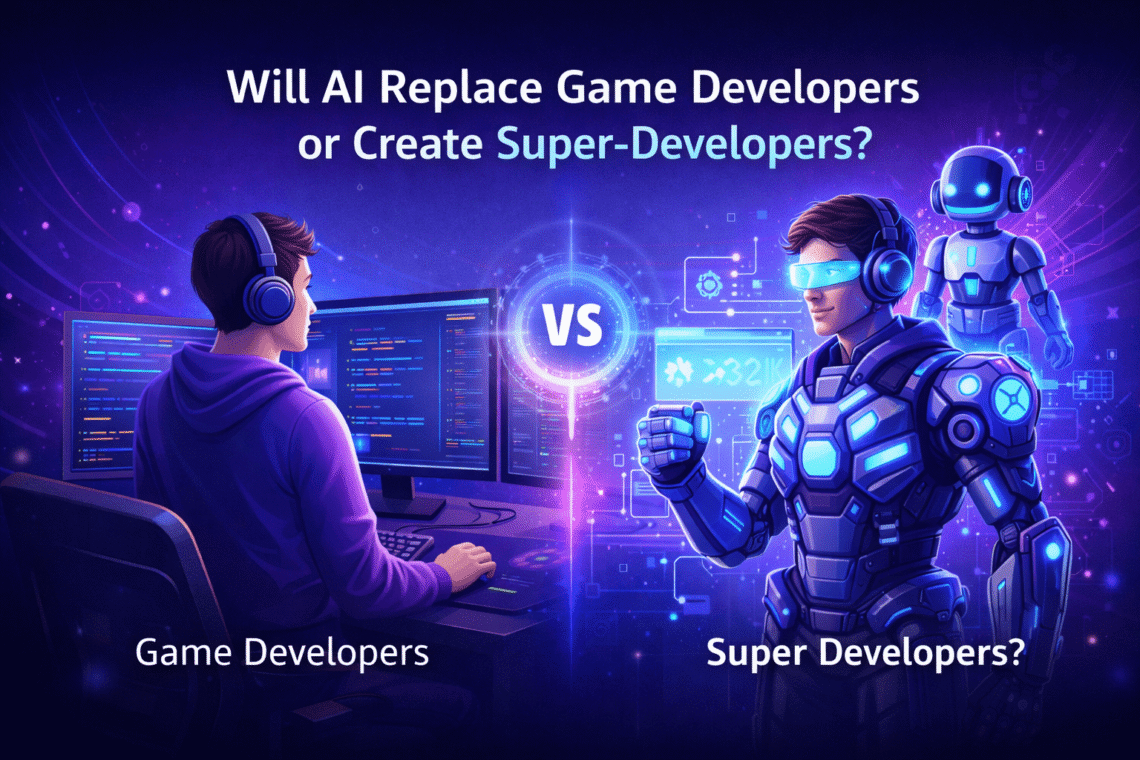
Artificial intelligence is rapidly becoming part of modern software development workflows. In game development, AI tools are now used for coding assistance, asset generation, testing automation, animation support, and procedural content creation. This shift has sparked an important question across studios, indie communities, and tech forums: will AI replace game developers, or will it enhance their capabilities?
Game development is a multidisciplinary field that combines programming, art, storytelling, audio engineering, mathematics, and player psychology. While AI systems can generate code snippets, textures, dialogue drafts, and behavior simulations, professional game production involves structured design processes, creative direction, technical architecture, optimization, and quality assurance.
Rather than eliminating the role of developers, current AI tools function primarily as productivity enhancers. They assist with repetitive tasks, speed up prototyping, and support workflow efficiency. Core responsibilities such as system design, gameplay balancing, performance optimization, creative storytelling, and long term product strategy remain driven by human decision making.
The discussion is not simply about replacement. It is about how responsibilities evolve as new tools become integrated into production pipelines. Developers who understand both traditional game development fundamentals and modern AI assisted workflows are positioned to work more efficiently and deliver higher output without compromising creative control.
Quick Answer: Will AI Replace Game Developers?
No. AI is not positioned to fully replace game developers. It is currently used to assist with specific tasks such as code suggestions, asset generation, automated testing, and workflow acceleration. Core areas of game development including system architecture, gameplay design, narrative structure, artistic direction, and performance optimization continue to require human expertise and oversight.
Game development is a structured and collaborative process. While AI tools can generate outputs based on patterns in training data, they do not independently define product vision, manage production cycles, evaluate player experience at a strategic level, or make high level design tradeoffs. These responsibilities remain part of human led development teams.
Instead of replacement, the more accurate shift is role expansion. Developers who integrate AI tools into their workflow can reduce repetitive manual work and allocate more time to creative, architectural, and strategic tasks. This adjustment reflects tool evolution within the industry rather than workforce elimination.
The broader impact of AI in game development depends on how studios adopt it. In practice, AI functions as a support system within existing pipelines rather than an autonomous replacement for professional game developers.
How Artificial Intelligence Is Transforming Game Development
Artificial intelligence technologies are increasingly integrated into modern game production workflows. Their impact is visible across programming, art creation, testing, and content generation. Rather than replacing core roles, these systems are being used to improve efficiency and support development teams.
AI in Game Programming
AI assisted coding tools are used to suggest code completions, detect syntax issues, and accelerate repetitive scripting tasks. Developers still define architecture, logic flow, memory management, and optimization strategies. The tools support implementation but do not independently design complete gameplay systems.
In large scale projects, programming involves performance tuning, cross platform compatibility, engine level customization, and networking infrastructure. These areas require structured decision making and deep technical understanding that extends beyond automated suggestions.
AI in Art and Asset Creation
In visual production, AI systems can generate concept drafts, textures, environment references, and character variations. Artists use these outputs as starting points rather than final deliverables. Professional art direction requires consistency in style, alignment with narrative themes, and adherence to technical constraints such as polygon limits and rendering pipelines.
Game art production also includes animation rigging, lighting design, user interface layout, and cinematic sequencing. These tasks involve iterative refinement and coordination between departments.
AI in Game Testing and Quality Assurance
Quality assurance teams use AI driven testing tools to simulate player behavior, identify bugs, and stress test systems. Automated testing can increase coverage and reduce repetitive manual testing cycles.
However, human testers remain essential for evaluating gameplay balance, emotional engagement, accessibility, and usability. Player experience cannot be measured solely through automated simulations.
AI in Procedural Content Generation
Procedural generation systems use algorithms to create levels, terrain, quests, or non player character behaviors. These systems help expand game worlds and support dynamic gameplay experiences.
Developers design the underlying rules and constraints that govern procedural systems. Without human defined parameters, generated content lacks coherence and design intent.
What Artificial Intelligence Cannot Replace in Game Development
Despite advancements in automation and content generation, several core components of game development remain dependent on human expertise. These areas involve creative judgment, strategic decision making, and cross disciplinary coordination that extend beyond pattern based outputs.
Creative Direction and Vision
Every successful game begins with a defined creative vision. This includes thematic consistency, narrative tone, artistic identity, gameplay philosophy, and target audience positioning. Establishing and maintaining this vision requires leadership, interpretation of player expectations, and adaptation during production.
Creative direction also involves resolving conflicts between design goals and technical limitations. These decisions require contextual understanding and long term planning.
Gameplay System Design
Designing gameplay systems involves balancing mechanics, difficulty progression, reward structures, pacing, and player motivation. Developers analyze player behavior, test iterations, and refine systems based on feedback.
Game balance is not purely mathematical. It includes understanding emotional response, perceived fairness, and engagement cycles. These evaluations rely on human interpretation and experience.
Narrative Structure and Emotional Impact
Story driven games require structured plot development, character arcs, dialogue tone, and thematic depth. Even in gameplay focused titles, emotional engagement influences player retention and immersion.
Narrative coherence depends on cultural awareness, context sensitivity, and intentional storytelling decisions. These aspects require editorial judgment and creative refinement.
Technical Architecture and Optimization
Game development involves engine configuration, memory management, performance optimization, networking infrastructure, and platform specific compliance. Developers design scalable systems that operate reliably across devices.
While automation can assist in identifying performance issues, architectural decisions require long term foresight and system level thinking.
Cross Functional Collaboration
Modern game production involves programmers, designers, artists, sound engineers, producers, and marketing teams. Coordinating timelines, resolving production bottlenecks, and aligning departments requires communication and management skills.
Collaboration also includes responding to community feedback and adjusting development priorities.
Artificial Intelligence Versus Human Developers: A Practical Comparison
Understanding the difference between automated systems and professional developers requires examining specific capabilities across production areas. The distinction is not about superiority, but about function and responsibility within the development pipeline.
Speed and Task Automation
AI systems can process large volumes of data and generate outputs quickly. Code suggestions, asset variations, or automated test simulations can be produced in seconds.
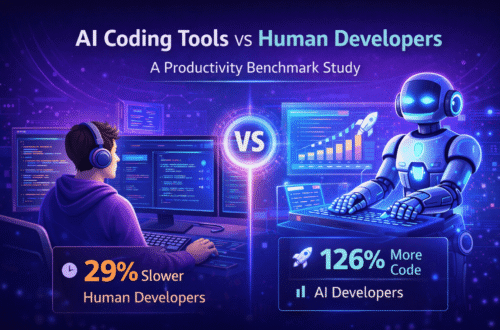
Human developers, while comparatively slower in raw output speed, apply structured reasoning, debugging logic, and design intent during implementation. Speed alone does not determine production quality.
Creativity and Originality
AI systems generate results based on patterns learned from existing data. Outputs are influenced by prior examples rather than independent conceptual invention.
Human developers create new gameplay mechanics, narrative structures, and artistic styles based on imagination, experimentation, and cultural context. Innovation often emerges from risk taking and unconventional thinking.
Emotional Intelligence and Player Experience
Player engagement depends on emotional pacing, challenge balance, reward psychology, and narrative tone. These elements are refined through interpretation of player feedback and community response.
AI systems can analyze behavioral data but do not independently evaluate emotional resonance or long term player attachment.
Strategic Thinking and Product Direction
Game production requires roadmap planning, resource allocation, platform strategy, monetization design, and market positioning. These decisions are influenced by business goals, audience analysis, and competitive landscapes.
Strategic decision making remains guided by human leadership within studios and independent teams.
Accountability and Ownership
Professional developers are accountable for product quality, compliance, security, and long term support. Automated systems function as tools within a framework defined by developers.
Will Artificial Intelligence Replace Junior Game Developers First
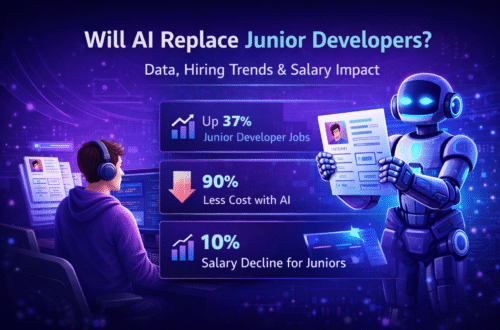
One of the most common concerns in the industry is whether entry level or junior game developers face higher risk of displacement. This concern usually stems from the fact that junior roles often involve repetitive tasks such as debugging support, basic scripting, asset integration, documentation updates, and testing assistance.
Nature of Junior Level Responsibilities
Junior developers typically work under supervision while learning production pipelines, engine architecture, coding standards, and collaborative workflows. Their responsibilities may include:
-
Implementing predefined features
-
Fixing minor bugs
-
Writing simple scripts
-
Integrating assets into the engine
-
Supporting senior developers
Some of these tasks can now be partially assisted by automated coding tools and testing systems. However, assistance does not equal replacement.
Learning and Skill Development
Junior roles are not limited to task execution. They function as training phases where developers build foundational knowledge in system design, debugging logic, performance optimization, and production communication.
AI tools may accelerate repetitive work, but understanding why a solution works remains essential. Without foundational knowledge, developers cannot evaluate, correct, or refine automated outputs.
Industry Adaptation Rather Than Elimination
Historically, technological advancements have reshaped entry level roles rather than removing them entirely. Game engines reduced low level coding requirements. Version control systems streamlined collaboration. Automated testing tools reduced manual QA cycles. Yet development teams continued to require skilled professionals.
Similarly, AI integration is more likely to shift expectations. Junior developers may be expected to:
-
Understand how to use AI tools responsibly
-
Validate generated outputs
-
Optimize and refactor suggested code
-
Combine automation with structured design thinking
Supervised Oversight Remains Necessary
Automated systems do not independently manage production quality. Errors, performance issues, and logical inconsistencies still require human review. Junior developers often assist in this review process under guidance.
The Rise of the Super Developer
As development tools evolve, productivity expectations shift. In modern workflows, developers who integrate automation effectively are able to complete tasks faster while maintaining quality standards. This shift has led to what many describe as the rise of the super developer.
A super developer is not defined by automation alone. The distinction lies in combining strong technical fundamentals with efficient tool usage. Instead of spending hours writing repetitive boilerplate code or manually generating placeholder assets, developers can allocate more time to system design, optimization, and creative refinement.
Increased Prototyping Speed
Rapid prototyping is critical in game development. Testing mechanics early helps teams identify whether a concept is engaging before committing large resources.
With automation assistance, developers can:
-
Generate functional prototypes faster
-
Test multiple gameplay variations
-
Iterate on mechanics with shorter development cycles
Faster iteration does not remove the need for design evaluation. It simply accelerates experimentation.
Smaller Teams, Higher Output
Independent studios and small teams often face resource limitations. By streamlining repetitive tasks, developers can focus on higher level decisions without expanding team size.
This does not eliminate collaboration, but it improves efficiency within limited production budgets.
Focus on Creative and Technical Depth
When routine implementation time decreases, developers can invest more attention in:
-
Gameplay balance
-
Performance optimization
-
Player feedback analysis
-
System architecture refinement
This shift allows technical depth and creative direction to receive greater emphasis.
Tool Mastery as a Competitive Advantage
As workflows modernize, proficiency in development tools becomes part of professional skill sets. Developers who understand how to validate, refine, and integrate automated outputs maintain stronger production control.
The super developer is not someone replaced by technology. It is someone who understands both the fundamentals of game development and the effective use of advanced tools to increase efficiency without compromising quality.
Skills Game Developers Should Develop in the Modern Production Environment
As workflows continue to evolve, long term career stability depends on strong technical foundations combined with adaptability. The focus is not on competing with automation, but on strengthening capabilities that remain essential to professional game development.
System Architecture and Engine Knowledge
Understanding how game engines function internally remains critical. Developers should build expertise in:
-
Rendering pipelines
-
Physics systems
-
Memory management
-
Networking architecture
-
Platform optimization
Tool assistance does not replace deep engine level understanding. Strong architectural knowledge ensures scalable and stable projects.
Gameplay Design and Player Psychology
Successful games rely on balanced mechanics, progression systems, reward loops, and pacing. Developers benefit from studying:
-
Player engagement patterns
-
Difficulty curves
-
Feedback systems
-
Retention mechanics
These principles guide decision making beyond automated suggestions.
Performance Optimization
Optimization is one of the most technically demanding areas of game development. Developers should strengthen skills in:
-
Profiling tools
-
Frame rate stabilization
-
Resource management
-
Load time reduction
-
Cross platform compatibility
Performance decisions require system level awareness and testing.
Debugging and Problem Solving
Identifying root causes of complex bugs requires analytical reasoning. Even when tools suggest fixes, developers must evaluate whether those fixes address underlying issues.
Structured debugging methodologies remain essential in large scale projects.
Cross Functional Collaboration
Game production depends on collaboration between programmers, artists, designers, audio engineers, and producers. Developers benefit from improving:
-
Communication clarity
-
Documentation practices
-
Version control management
-
Agile workflow participation
Clear communication supports efficient production cycles.
Continuous Learning
The game industry evolves rapidly. Developers who regularly update their knowledge of engines, programming languages, optimization techniques, and production tools remain competitive.
Professional growth in this field is tied to adaptability, technical depth, and creative thinking rather than reliance on any single tool.
Future of Game Development in the Age of Advanced Tooling
Game development continues to evolve alongside improvements in software tooling, hardware capabilities, and production methodologies. The integration of intelligent systems into workflows represents another stage in this evolution rather than a complete structural replacement of professional roles.
Faster Production Cycles
Modern development environments reduce time spent on repetitive implementation tasks. This allows teams to iterate more quickly, refine gameplay systems earlier, and shorten pre production phases. Faster iteration supports more experimentation before final release decisions are made.
Shorter development loops can improve product quality by allowing additional testing and refinement within the same timeline.
More Sophisticated Game Worlds
Procedural systems, behavioral modeling, and simulation tools enable more dynamic game environments. Developers can design systems that respond to player actions in more complex ways, creating adaptive experiences.
However, these systems still require structured design rules, performance constraints, and testing oversight to ensure stability and balance.
Personalized Player Experiences
Data analysis tools allow studios to study player behavior patterns and adjust content updates accordingly. Developers can refine difficulty levels, reward systems, and progression models based on structured feedback.
Personalization strategies depend on ethical data usage and transparent design practices.
Independent Studio Growth
Reduced production overhead allows smaller teams to manage larger scope projects. Accessible engines, asset marketplaces, and automation tools lower entry barriers for new developers.
At the same time, competition increases, requiring strong design fundamentals and clear creative identity.
Continued Human Leadership
While workflows become more efficient, leadership roles remain centered on creative direction, technical oversight, and strategic planning. Developers continue to define product vision, manage production schedules, and ensure cohesive player experiences.
Frequently Asked Questions
Can artificial intelligence create a full game on its own
Current systems can generate code snippets, visual assets, dialogue drafts, or simple game prototypes. However, complete commercial game production requires structured system design, asset integration, optimization, testing cycles, creative direction, and long term support. These responsibilities involve coordinated decision making and oversight that remain human led.
Will artificial intelligence replace Unity or Unreal Engine developers
Game engines such as Unity and Unreal Engine require developers who understand scripting, rendering systems, physics integration, performance profiling, and platform deployment. Automation tools may assist with implementation tasks, but engine level customization, optimization, and architectural planning require professional expertise.
Is game development a stable career choice
Game development remains a multidisciplinary field combining programming, art, design, audio engineering, and production management. As tools evolve, skill requirements adjust, but demand for professionals who can design systems, optimize performance, and deliver cohesive player experiences continues across studios and independent teams.
How can developers stay competitive in modern production environments
Developers can strengthen their position by focusing on system architecture, gameplay design principles, debugging methodologies, performance optimization, and cross functional collaboration. Staying updated with engine updates, production tools, and industry best practices also supports long term career growth.